Mama, You Don’t Have to Stay Exhausted
Join thousands of women learning how to restore their energy, balance their hormones, and care for their bodies the way God designed them.
JOIN MY FREE <Enter in the title, description, and main benefit of your lead magnet here>
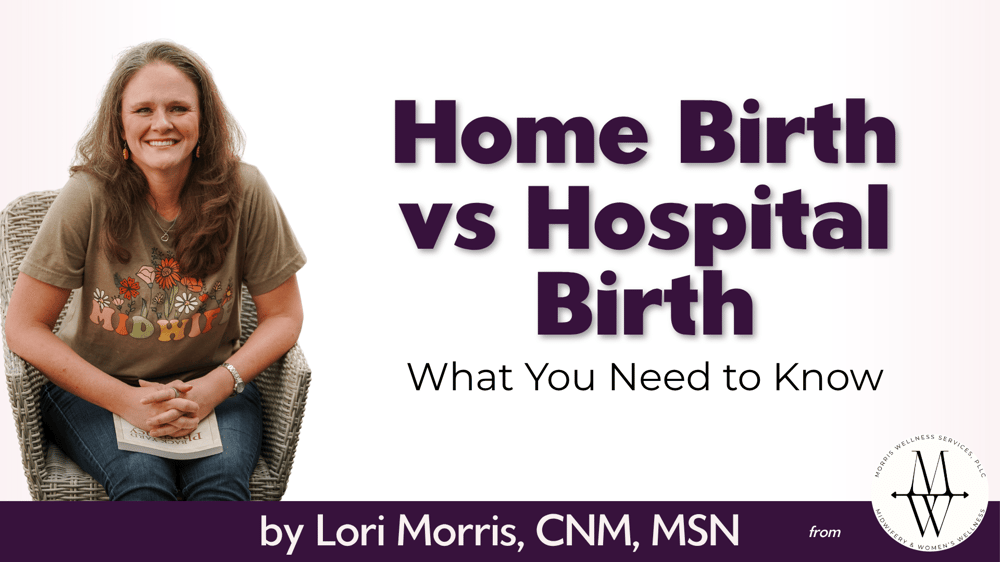
Is Home Birth Safe for You? When Hospital Birth May Be Safer
Tuesday, February 20, 2024
Prefer to listen? Here's the audio!
I know that you are starting to want to have your home birth. Maybe you've even already decided that you're going to, and if that's what you decided, that is great. I'm very, very happy that you've made that decision. But with hospital birth still seemingly, to most people, the norm here in this country, right? Most people go to the hospital to have babies.
So now you're thinking, well, I wanna have my baby at home, but is that really safe? Is there a reason I should be in the hospital? Are there people that are safer to give birth in the hospital? Well, in today's episode, we're gonna answer that question.
I found a secret that has actually been known since the beginning of time. God's way is the best way. Spoiler alert: God made us and our babies, and He knows us best. He designed us perfectly for pregnancy, birth, and nourishing our babies after birth if we work with His design and not against it.
In this podcast, you'll learn how to be healthy and have joy during this time of life that will be over before you know it. So if you're ready to reclaim your birth and your babies for His glory, go turn on a few episodes of Bluey for that little one on your hip so you can put the focus back on you for a few minutes with me.
Why Home Birth is Safe for Most Moms
Once you figure out that the hospital system is based on a lie, it's normal to want to get as far away from that as possible. It's what I did. I went running the other direction. Sometimes it's easy to go too far, though. The hospital obviously serves some purpose, but what is it? Honestly, it is best for most moms to give birth at home.
Home is good, it's normal, it's comfortable, and it's the best place for most mamas. Most moms can be at home to give birth safely because most things that go wrong with babies suddenly out of nowhere almost never happen at home. The things that cause them to "tank," as we sometimes call it, are often Pitocin, epidurals, and medications given unnecessarily, which a baby can't handle because the labor becomes unnaturally intense.
At home, labor progresses naturally and normally the way God intended it to. Contractions come in waves, gradually, progressively stronger in a way that the baby can handle. At home, these quick, out-of-nowhere emergencies almost never happen.
When Hospital Birth is Safer
There are some situations where a hospital birth is safer. These situations are usually tied to either preexisting health conditions or complications in the current pregnancy.
Current Pregnancy Complications
Premature labor: If your baby is born too early, the hospital has the resources needed.
Polyhydramnios or oligohydramnios: True diagnoses of too much or too little amniotic fluid may require hospital care.
Placenta previa: If the placenta covers part or all of the cervix at term.
Anatomical concerns with the baby: If ultrasound shows something requiring immediate attention.
Intrauterine growth restriction (IUGR): If the baby stops growing as expected.
True preeclampsia: Diagnosed with specific criteria, not just one elevated blood pressure reading.
Other unpredictable emergencies like cord prolapse, uterine rupture, abruption, eclamptic seizure, or amniotic fluid embolism almost never happen, but if they do, transfer is required.
Preexisting Maternal Health Conditions
High blood pressure, heart disease
Liver or kidney disease
Seizure disorders, uncontrolled asthma, pulmonary disease
Uncontrolled diabetes
HIV or AIDS
Severe psychiatric conditions
Substance abuse concerns
Active genital herpes lesions at labor onset
Special Considerations
Prior C-section (VBAC): May still allow home birth depending on incision type and timing.
Multiples (twins, triplets): Possible at home with the right provider.
Breech baby: Vaginal breech delivery is possible with a trained provider.
Going past your due date (past 40 weeks): Not automatically an emergency.
Body mass index (BMI): Some structural concerns may make hospital safer, but it depends on the provider and situation.
How to Navigate Hospital Birth While Keeping Your Plan
Even if hospital birth is recommended, you don’t have to abandon your birth plan. You can:
1. Ask questions: What is needed, why, the risks, benefits, and alternatives.
2. Maintain a birth plan: Outline your preferences respectfully.
3. Collaborate with a midwife: Your midwife may support you during labor even in a hospital.
4. Request minimal interventions: Signs on your door, minimal interruptions, and as little unnecessary interference as possible.
A helpful resource is Natural Hospital Birth by Cynthia Gabriel, which provides ways to have a natural birth in the hospital.
Get Extra Support
Sometimes you need one-on-one guidance, whether that's deciding if home or hospital birth is right for you, forming a birth plan, or helping your family support your plan. If you'd like my help with this, you can see all the ways we can work together on my Menu of Services.
Final Thoughts
Most moms can safely give birth at home. Even if hospital birth is necessary, you don’t have to give up your God-centered birth plan. You can still advocate for what you want, maintain your preferences, and receive the support you need.
Don’t forget to set your reminders. I post new episodes every Tuesday. If today’s episode blessed you, head over to Apple Podcasts and leave a quick five-star review—it helps reach more moms and dads so we can all find God’s best for our families.
This post may contain affiliate links. I may earn a small commission at no extra cost to you. I only share products I personally use and believe align with healthy, God-designed living.

HI, I'm Lori!
Certified Nurse-Midwife
& Health Coach

15% off for everyone. 35% off for my 1:1 clients.
Site Links:
social Links:
Copyright 2026 - Morris Wellness Services, PLLC