Mama, You Don’t Have to Stay Exhausted
Join thousands of women learning how to restore their energy, balance their hormones, and care for their bodies the way God designed them.
JOIN MY FREE <Enter in the title, description, and main benefit of your lead magnet here>
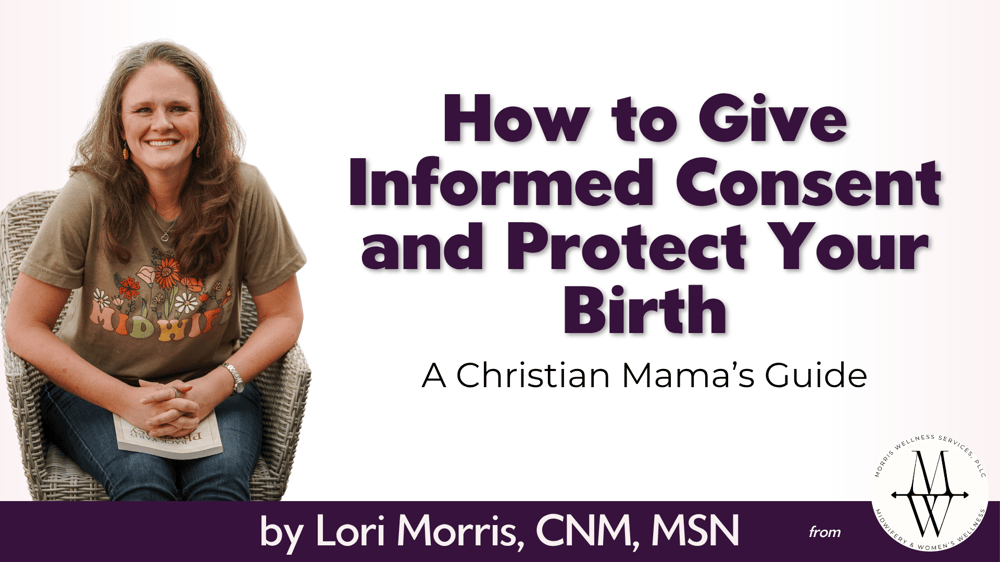
How to Give Informed Consent and Protect Your Birth: A Christian Mama’s Guide
Thursday, November 20, 2025
Prefer to listen? Here's the audio!
The Deer in Headlights Moment
So, your doctor walks in and says, “Well, it's looking like your baby's pretty big. We better go ahead and get you booked for your induction so the baby will fit through.” He hands you some paperwork, says congratulations. It's almost time to meet your baby. And you’re sitting there like a deer in headlights.
What just happened? What’s next? How come he didn’t tell you more? How come you didn’t get to ask questions? This is the norm in maternity care. You’re told what’s gonna happen, not informed and asked what you’d like to do. So how do you actually give informed consent—or even informed denial—in this culture?
Understanding Risk in Birth and Life
Okay, so there is really no risk-free scenario in life. Nothing is 100% safe. You might just be walking to the mailbox and a drunk driver could hit you on their way home. You might be checking out at the grocery store and somebody hits the gas instead of the brakes and comes right through the front window and hits you.
There is risk everywhere. It's one reason why you really gotta make sure that you're right with God at all times because you never know when your time's coming, right?
That's not the main point of this episode, but I just always wanna throw that in there. I always wanna keep you focused on the big thing—the main thing—and that is eternal salvation.
Understanding Risk in Birth
At any rate, birth is no different. The key is deciding what risks you're okay with taking on and which ones you'd rather not take on. Let's think about an example.
Let's say you're scared to drive a car. You know it's dangerous. You know that on the interstate you can get a lot of places much faster, but you're also traveling at higher speeds. Now, while an accident is unlikely, if it does happen, it will likely be worse because of the speed involved.
Back roads, on the other hand, are slower, maybe a little bit windier, and usually have less traffic—but the trip's gonna be longer. You'll get to see more scenery, but you won't get to your destination for a longer period of time.
Both carry risk.
Birth Choices and Informed Consent
Now let's look at a birth example. Let's say you're 39 weeks. You find out your baby is in the breech position. You have two choices.
Your first choice is that you can find a birth attendant who is comfortable and skilled in attending vaginal breech birth. Vaginal breech birth carries risks, albeit less than the world tends to make you think. But so does the other option—a c-section.
You listen to the risks and benefits of both routes and you decide which set of risks is best for you. You weigh the options, and you make your choice. Then you own the choice. You made it on your own accord having a full set of information.
Why True Informed Consent Is Rare in Hospitals
Now, there is a very good chance that this type of informed consent—where you're getting all that you need to know—doesn't happen in hospitals.
Oh, they'll call it informed consent. A piece of paper may even say “informed consent” at the top, but it isn’t really. Not being able to give truly informed consent is actually the reason that I left my last hospital job as a nurse.
I figured out that I was really in a lose-lose situation. If I gave my patients true informed consent—if I really talked to them about the real risks of the medications that I was giving them as part of the standard orders—there was a good chance they were just gonna get up and go back home.
And hospitals don’t like to lose money.
How to Get True Informed Consent
So let's talk about how you can get the information you need to either give consent or deny your consent to whatever medicine or procedure they're wanting to do.
1. Ask for copies of all hospital paperwork several months before your due date.
This allows you time to read everything when you’re not in labor. Labor is not the time to think critically or make big decisions.
2. You do not have to give blanket consent.
You can write in that they need to consult with you or your husband before every procedure. Make sure your husband knows exactly what you want.
3. During labor, if you don’t understand something, ask.
You have every right to know the risks, the benefits, the alternatives, and whether it can wait an hour. If it can wait—it’s probably not necessary.
4. Remember that “no thank you” is a complete answer.
You do not have to go along with protocol if it isn’t right for you. This is your birth. Your body. Your choice.
Preparing for a Faith-Led Birth
Unfortunately, you have to do the legwork to learn what you need to know to make the best choices—but that’s why I made the Your Birth God’s Way Online Christian Childbirth Education Course. It’s designed to give you all the information you need to make informed, faith-led decisions about your pregnancy and birth.
Head over to www.morriswellnessservices.com/childbirth-education-course to learn more.
This post may contain affiliate links. I may earn a small commission at no extra cost to you. I only share products I personally use and believe align with healthy, God-designed living.

HI, I'm Lori!
Certified Nurse-Midwife
& Health Coach

15% off for everyone. 35% off for my 1:1 clients.
Site Links:
social Links:
Copyright 2026 - Morris Wellness Services, PLLC