Mama, You Don’t Have to Stay Exhausted
Join thousands of women learning how to restore their energy, balance their hormones, and care for their bodies the way God designed them.
JOIN MY FREE <Enter in the title, description, and main benefit of your lead magnet here>
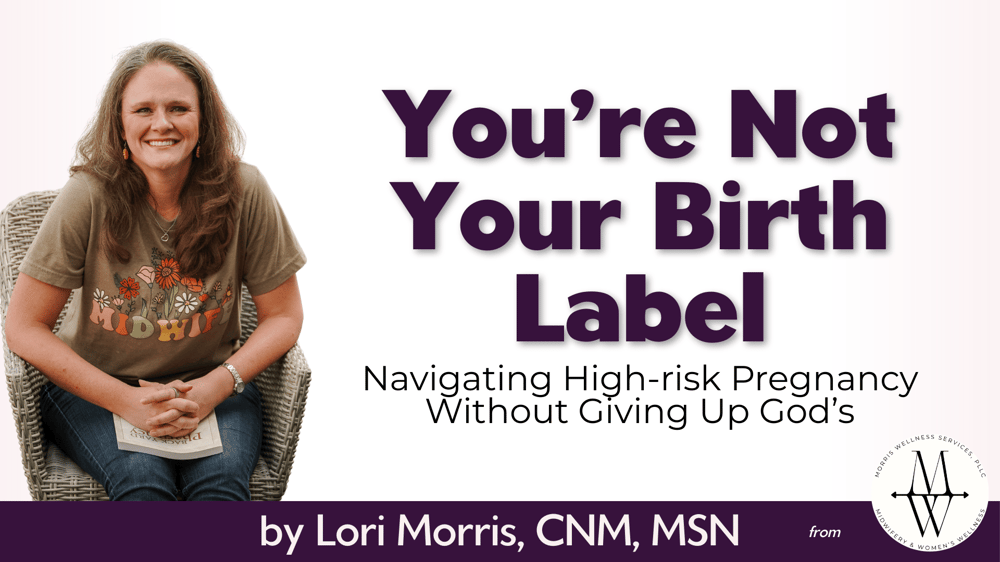
You’re Not Your Birth Label: Navigating a High-Risk Pregnancy
Tuesday, April 01, 2025
Prefer to listen? Here's the audio!
You’re Not Your Birth Label
I hear so many moms say, I wanted to go natural, but I was high risk, so I couldn’t, or I wanted to have a home birth, but I had blank, so I had to go to the hospital. And while the underlying situation might have really been there, it might have been something that made you need to go to the hospital to be safer.
It’s not necessarily something that makes you have to give up everything that you wanted in your birth. If this sounds like you right now or you find that it sounds like you in the future, understand that just because you have something going on that causes them to label you high risk doesn’t mean that you have to give up and give in to all of the interventions.
Today we’re going to talk about what that looks like and how to navigate it.
Are you a Christian woman yearning for a beautiful, joyful pregnancy and birth with a focus on God, not medical tests? Are you worried the birth you want isn’t possible and you’re tired of being treated like an accident waiting to happen?
High Risk Is Just a Label
There are so many things that it seems are out there that can land you in that dreaded high-risk category. If you’ve been listening to this podcast for any length of time, you know what I think about the whole low-risk, high-risk label. It’s just a label, but it’s the world we live in, and so it’s also the world that we need to know how to navigate and deal with.
You might be somewhere where there’s no access to more nuanced care, where somebody is actually going to think things through and not just call you high risk and put all the things on you. We need to figure out how to work our way through the system in a way that we don’t give it all up.
Because I know if you’re listening to this podcast, there are probably a lot of natural things that you’re really wanting for your pregnancy and for your birth. And just because you get a label of high risk on something doesn’t mean most of it has to go out the window.
There may be a few things you have to compromise on for your safety and for your baby’s safety, but not everything.
When a Diagnosis Changes the Plan
Let’s say you have a preexisting condition like a heart condition, asthma, diabetes, or a thyroid condition. Or maybe you have a prenatal situation like preterm labor, multiple gestations, dates not matching baby’s size, or abnormal labs.
All kinds of things can land you with a high-risk label, and some of those things can change your birth location and plan. That’s the truth. Usually it’s for your good, because there may be a higher level of monitoring that you need.
But it doesn’t automatically mean you have to throw the proverbial baby out with the bathwater.
Remember, no is still an answer.
Medical professionals get to assess the situation and make recommendations based on their knowledge, experience, and opinions. That’s needed. But you are the one who decides.
You need to be reasonable and balanced. You don’t want to make an unsafe decision, but you also don’t want to be fear-mongered out of having the type of birth you want in any way possible.
A Real-Life Induction Example
Let’s say your blood pressure is high and you’re at or near term, and they want to induce you. They’re worried about preeclampsia, which is understandable.
You don’t want to be induced because you want to labor naturally, and you know induction can make that more difficult.
You could ask for a slow induction instead of throwing everything at you. You could ask them not to increase Pitocin as fast so it more closely mimics what your body would do on its own.
You might ask to try breast stimulation with a pump first, even while at the hospital, so they can monitor you while giving your body a chance to go into labor on its own.
You might ask to try those methods for a period of time, then stop and go for a walk to see if your body picks up the signal and continues labor naturally.
High blood pressure is something they want to move quickly on, but you can also ask if you could have a couple of days to work on your blood pressure with dietary changes. They may push back, but you can ask for monitoring time and commit to checking your blood pressure regularly.
This gives you space to learn about and implement the Brewer Diet, which has been known to reverse preeclampsia for some women.
If your symptoms are severe, this may not be appropriate. But in early stages, it can be something to work on.
And honestly, you should look into the Brewer Diet long before blood pressure becomes an issue.
You can also ask about natural induction methods your midwife may suggest. Sometimes when something is outside normal, your body already knows it’s time to give birth, and these methods can nudge things along.
These are just ideas to help you think outside the box so you don’t have to throw out your entire birth plan.
When a C-Section Is the Safest Option
There are times when a C-section really is the safest option, even though they are fewer than most people think.
If that decision has been made, you can still advocate for what matters to you.
You can ask for golden hour skin-to-skin contact, breastfeeding in the first hour, and delayed cord clamping.
You can request that the drape be lowered and that your baby be placed directly on your bare skin, not wrapped in a swaddle, with your husband helping keep baby secure.
You can ask for delayed cord clamping. They may worry about infection risk, but a C-section is usually about 30 minutes long, and many surgeries last much longer. Giving the placenta time to pump blood back to your baby is unlikely to significantly increase your risk.
You can also ask that antibiotics be given after the cord is cut so your baby’s microbiome isn’t impacted unnecessarily.
You can ask that your baby stay with you and not be taken to the nursery. They won’t like this because of protocols and checkboxes, but remember, it’s your baby.
These are things that are much easier to advocate for when they’re discussed ahead of time, especially when the situation isn’t emergent.
These moments with your baby cannot wait. The nurses can. The computer system can. These moments cannot be replaced.
You Were Made to Give Birth
There are so many labels that can be put on you, but at the end of the day, the label doesn’t matter. What matters is that you advocate for yourself and hold onto every bit of your birth plan and wishes that you can.
Having something outside of normal doesn’t change the fact that God made you to give birth. This is still a natural process.
You may have extra issues to deal with, but it’s still a beautiful, natural process, and you deserve to be respected, not treated like an accident waiting to happen.
Why a Doula and Midwife Matter
This is when having a doula is a really good idea. A doula can help you navigate the system and advocate for yourself before and during labor in ways no one else can.
Even if you need physician care for part of your pregnancy, ask about co-care with a midwife so only the truly high-risk issue is managed by the physician, while the rest of your pregnancy is treated as normal.
You are not one big label. You are a woman giving birth.
Learn to Navigate Birth God’s Way
If you want to learn more about how to navigate the system, my course covers everything we’ve talked about here and more.
To have a natural, God-led pregnancy, birth, and postpartum, go to www.morriswellnessservices.com/childbirth-education-course and join us.
We cover everything you need to know so you can understand interventions, their purposes, and whether you truly need them.
If today’s episode blessed you, would you head over to Apple Podcasts and leave a quick five-star written review? It takes less than a minute and helps reach more mamas so we can all find God’s best for our families.
I’ll see you right back here next week.
This post may contain affiliate links. I may earn a small commission at no extra cost to you. I only share products I personally use and believe align with healthy, God-designed living.

HI, I'm Lori!
Certified Nurse-Midwife
& Health Coach

15% off for everyone. 35% off for my 1:1 clients.
Site Links:
social Links:
Copyright 2026 - Morris Wellness Services, PLLC