Mama, You Don’t Have to Stay Exhausted
Join thousands of women learning how to restore their energy, balance their hormones, and care for their bodies the way God designed them.
JOIN MY FREE <Enter in the title, description, and main benefit of your lead magnet here>
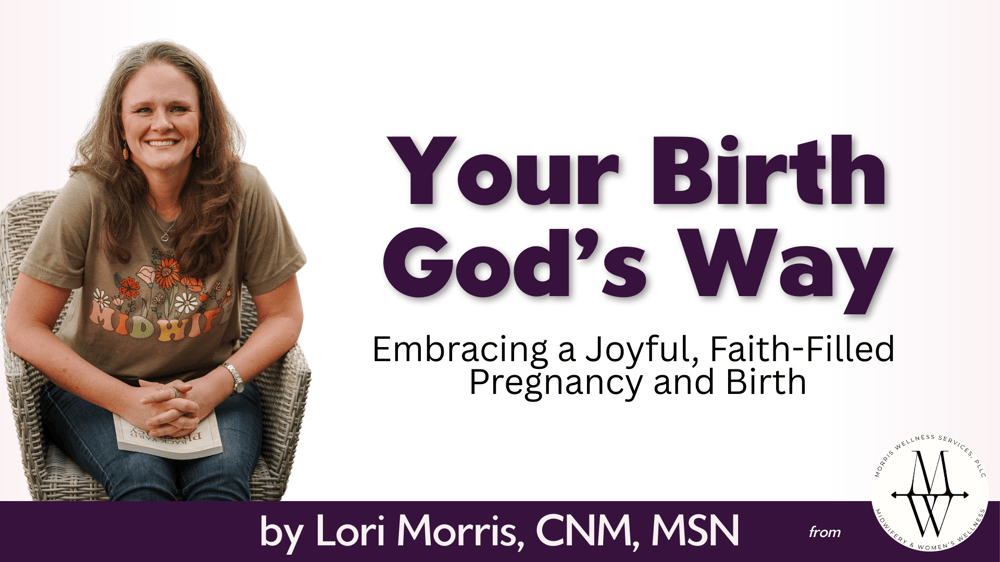
What Is a Contraction? How God Designed Labor to Bring Your Baby Into Your Arms
Monday, November 09, 2026
This post may contain affiliate links. I may earn a small commission at no extra cost to you. I only share products I personally use and believe align with healthy, God-designed living.
What Is a Contraction? How God Designed Labor to Bring Your Baby Into Your Arms
By Lori Morris, CNM, certified nurse-midwife and women's health coach
A contraction is your uterus, a big muscle, tightening and shortening to thin and open your cervix and move your baby down and out. Contractions are involuntary, like your heartbeat. In labor they start mild, short, and far apart, then get longer, stronger, and closer together. Each one rises like a hill, peaks, and fades. They're intense, but they're work, not injury, and relaxing into them instead of tensing helps them do their job.
I hope nobody skipped this one because of the title. I'm not trying to insult your intelligence. I want to add to your understanding of how God designed your body, so you can have faith that it will work the way it was made to work when you let it.
Birth in Scripture
The Bible talks about labor again and again:
- "For we know that the whole creation groans and labors with birth pangs together until now" (Romans 8:22).
- "A woman, when she is in labor, has sorrow because her hour has come; but as soon as she has given birth to the child, she no longer remembers the anguish, for joy that a human being has been born into the world" (John 16:21).
- "To the woman He said: 'I will greatly multiply your sorrow and your conception; in pain you shall bring forth children'" (Genesis 3:16).
- "Before she was in labor, she gave birth; before her pain came, she delivered a male child" (Isaiah 66:7).
Something powerful happens when birth is near, and these women knew it. The sensations of labor aren't random. They're part of God's design, and that powerful thing is what we call contractions.
What a contraction is
"Contraction" just means a muscle is shortening, the same way your bicep shortens when you bend your arm. Your baby lives and grows in your uterus all pregnancy. When it's time for birth, the uterus starts squeezing periodically to move the baby out.
The medical world calls those squeezes contractions. Some people call them waves or surges to separate them from the idea of pain. Whatever you call them, it's the same muscle doing the same work, and it's involuntary. You can't make it happen yourself, and that's good, because it was designed that way.
Practice contractions (Braxton Hicks)
Braxton Hicks are practice contractions, little squeezes that tone your uterus and get it ready for labor. Sometimes they thin the cervix a little, and sometimes they don't. They usually pick up as your birth gets closer.
Your uterus also reacts to dehydration, so being dehydrated can cause contractions. That's one reason staying well hydrated in pregnancy matters so much. It helps prevent early contractions that could lead to preterm labor.
What contractions do in labor
At the simplest level, they squeeze your baby out. But there's more to it:
- Early labor contractions are short, mild, and far apart. As labor goes on, they get longer, stronger, and closer together.
- The cervix (the bottom part of the uterus) first thins out, then opens. Think of a very tight donut thinning before it widens.
- The uterus pulls muscle up toward the top (the fundus), which gives it the power to push your baby out when it's time.
- Each contraction is like a hill. It builds slowly, peaks, holds for a bit, and then eases off. Early ones can be barely noticeable. Later ones are intense because they're doing real work.
Your baby is working too
Your baby isn't just along for the ride. Your baby turns and moves down through your pelvis, and your pelvis shifts to make room. That's why moving in labor is so important. If you lie on your back, your baby may stay in a hard position, and contractions alone can't fix it. (Read more in Why Lying on Your Back Isn't the Natural Way to Give Birth.)
You'll often feel the urge to move, shift, or sway. Follow it. Those urges help your baby rotate and come down. Most head-down babies turn as they come through the pelvis and end up facing your back.
Labor is like a symphony, and contractions are the rhythm that keeps the music going. They're communication between your body, your baby, your Lord, and you, all working together when you let them. There's no reason to fear them. (More on that in The Symphony of Birth.)
Why relaxing matters so much
As contractions get stronger, a lot of women tense up bracing for the next one. That's the worst thing you can do. The muscles around your uterus that you can control end up working against the ones you can't, the ones pushing your baby down.
Learning to relax through contractions is essential. That's why I include relaxation tracks in my course. They remind you to let go and let your body do what God designed it to do. In my own birth, those tracks helped me surrender, and being in the water held my body up so I could float and relax while my uterus did its work.
Learn to work with your body in labor
My online Christian childbirth course goes deep on how labor works, relaxation, positions, and every decision along the way, all from a biblical perspective, with relaxation tracks to use before and during birth.
See the courseCommon questions
What does a contraction feel like?
Early on, many feel like a gentle tightening or period-like cramp. As labor goes on, they get stronger, longer, and closer together. Each one builds, peaks, and fades like a hill.
What is the difference between Braxton Hicks and real labor contractions?
Braxton Hicks are practice contractions that tone the uterus and don't follow a steady pattern. Labor contractions keep getting longer, stronger, and closer together and open the cervix.
Can dehydration cause contractions?
Yes. The uterus can contract when you're dehydrated, which is one reason staying well hydrated in pregnancy helps prevent early contractions.
How can I cope with contractions naturally?
Relax instead of tensing, move and change positions as your body leads, and consider water. Relaxation practice before labor makes a big difference.
How I can help
Next, read about the pushing stage in Understanding the Pushing Phase of Birth. If you're not pregnant yet or you're thinking about your options, my free class, The Truth About Birth Control, walks through how each method works and how it affects God's design for your body. You'll find all my services on my Menu of Services, or email me at lori@morriswellnessservices.com.
God designed you for this. You can listen to the full episode of If Mama Ain't Healthy (Ain't Nobody Healthy) at the top of this page.

HI, I'm Lori!
Certified Nurse-Midwife
& Health Coach


Site Links:
social Links:
Copyright 2026 - Morris Wellness Services, PLLC